10 October 2025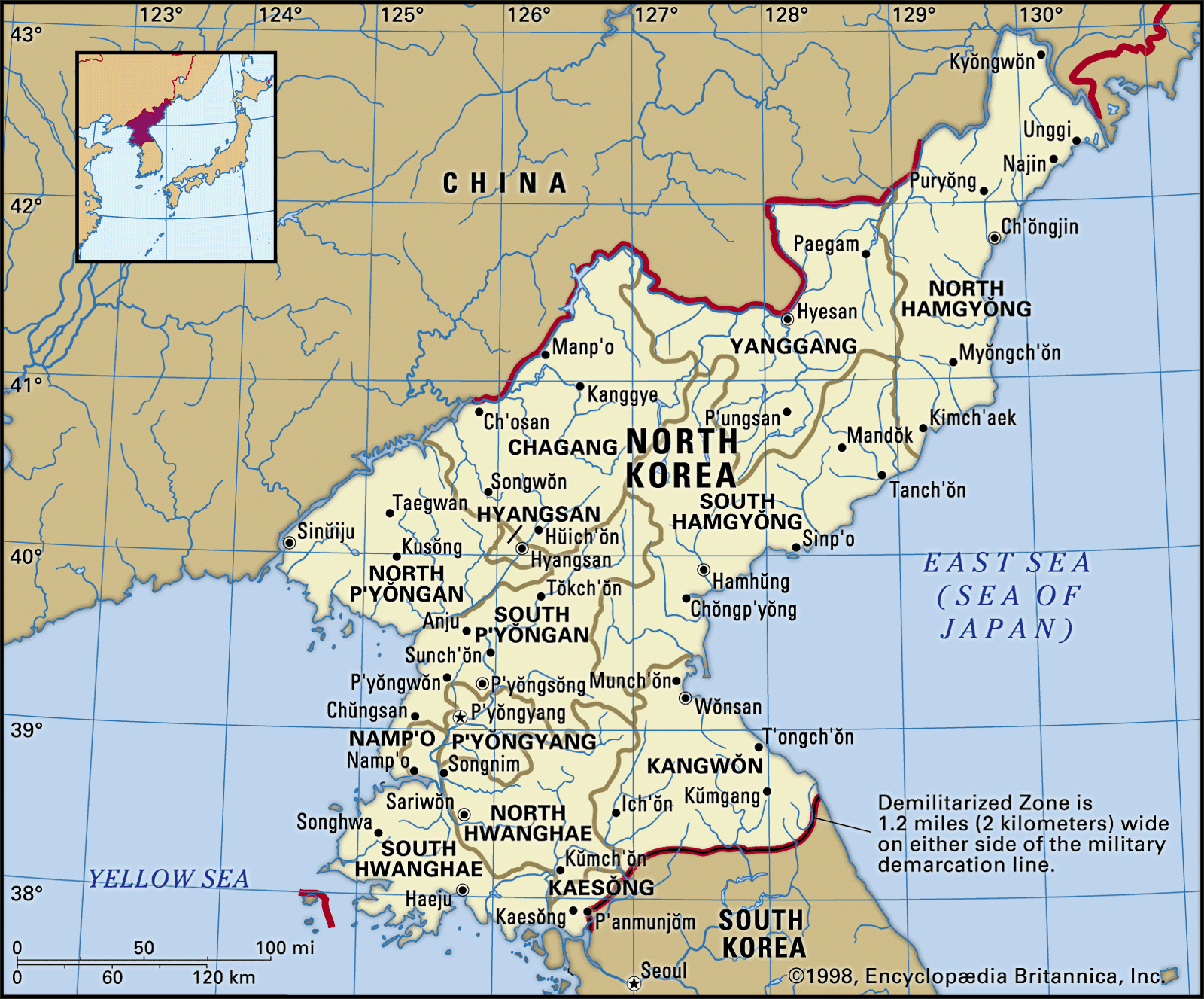
The Fine Line Between Fear and Power: North Korea as a Rational Nuclear Actor in a Chaotic World Order
North Korea is often portrayed as dangerous, irrational and unpredictable. It is seen as an authoritarian and secretive state, but beyond these vague assumptions and opinions, what truly lies behind its isolation strategy, and how do they use nuclear weapons to maintain their stature in the world order? North Korea is a pariah state and has been ruled by one of the world’s most enduring dynastic dictatorships since 1948–the Kim dynasty. From Kim Il-Sung, to Kim Jong-Il, to North Korea’s actual supreme leader, Kim Jong-Un (Albert, 2020). North Korea has voluntarily chosen the path of isolation, partly due to the integration of Juche ideology into its political system, which means “national self-reliance” (Van Ree, 1989). Driven by isolation, they have built a vast arsenal of nuclear weapons in response to security threats and potential aggression, particularly from the USA.
Contrary to popular belief, North Korea’s nuclear weapon program and ongoing development is not reckless, crazy or irrational, but rather a deeply calculated geopolitical strategy rooted in survival, lessons from the past, and the psychological manipulation of global perception. This report argues that North Korea’s nuclear stance reflects a rational adaptation to an international system that prioritises material power and mitigates vulnerabilities. In a world order with security fears, having the technological advancement of nuclear weapons leverages your seat at the table. To support this argument, the report will analyse North Korea’s role in the world order, its relationships, and its ideologies.
Figure 1: A useful map of North Korea and its neighbours: China and South Korea (Britannica, 2020)
North Korea’s Place in the World Order
North Korea’s place in the world order cannot be understood without touching upon its origins and historical context. After WWII, Korea, which had been occupied by Japan, was divided along the 38th parallel, the border between North and South Korea. North Korea was supported by the Soviet Union, and South Korea was allied with the USA, a capitalist democracy, naturally making the USA an enemy of North Korea. In 1950, North Korea invaded the South, which led to the Korean War. After three years of war and three million deaths, the war ended in 1953 upon signing an armistice agreement that stated that the country would remain divided (Imperial War Museums, 2018). An armistice is not a peace treaty; these nations remain technically at war. This unresolved conflict is a contributing factor to why North Korea justifies its nuclear weapons as harmless and its behaviour as “self-defence”.
Material power
According to realist theorists such as Kenneth Waltz (1979), a state’s relative material power drives its foreign policy. States use foreign policy to maintain or enhance their standing in the international order, and the extent of a state's material power determines the degree to which it can do so (Strong, 2024). States with high material power, such as North Korea, can influence the behaviour or perception of less powerful states. North Korea’s material power doesn’t rely on its economy but rather on its military regime and nuclear weapons program. Supreme leaders have been testing nukes since 1984, and with each test, the explosions have significantly grown in power (Council on Foreign Relations, 2021).
Figure 2: Graph showing the number of North Korea’s missile launches since 1984 (Graph by author, numbers attained from: The CNS North Korea Missile Test Database, 2024)
North Korea allocates more than 24% of its GDP to the military (Lemahieu, 2018). This disproportion emphasises the country’s siege mentality and justifies chronic impoverishment as a result of aggression by foreign nations.
Realism and Nuclear Deterrence Theory
Realism as an IR theory prioritises the state's survival against all odds. In an anarchic world order, states operate under constant uncertainty. This is why realist states make decisions that ensure survival even through the use of material power (Vinoy, 2022). In this case, North Korea’s affinity for nukes is noticeable, and the way they see it, they are surrounded by constant threats, which rationalises the only way to secure their survival: Nuclear weapons.
Nuclear deterrence theory, derived from the principle of Mutually Assured Destruction (MAD), further explains this behaviour. It is a shared understanding between opposing parties that the first and retaliatory use of nuclear weapons will destroy both. In the case of North Korea, maintaining a credible nuclear deterrent ensures that any potential aggression would come at an unacceptable cost, thus preserving the regime's existence. According to this theory, North Korea is rational in its pursuit of nuclear weapons, as it is based on clear and logical cost-benefit calculations: the way it weighs the risks of isolation against the benefits of survival (Kim, 2020). At the foreign policy level, the primary objective is deterrence. They want to deter regime change efforts from outside, not only from South Korea and the USA, but from China and Russia as well. In order to do so, North Korea has to keep presenting itself as a powerful military actor and as an unpredictable and dangerous nation. Provocations, either military or non-military, are meant to demonstrate that North Korea is so powerful that any attempt to challenge it will end in bloodshed (Der Meer, 2018).
According to the security model, states strive for nuclear weapons when faced with outside threats. In light of this, North Korea developed nuclear weapons to protect itself from potential threats like the US, Japan, and South Korea. From an outlier’s point of view, North Korea’s constant adherence to nuclear weapons seems irrational because it maintains isolation from the rest of the world despite neighbouring states assuring regime security and proposing economic aid. However, they have perfectly logical reasons. After seeing what happened in Iraq and Libya, administrations that gave up their WMDs (weapons of mass destruction) and were later attacked by the US and NATO and had no way of defending themselves, North Korea learned that its nukes are indispensable for survival(Kim, 2020). It is not an exaggeration; it is a rational response to international patterns and behaviours.
North Korea’s nuclear strategy, apart from defence, involves using nukes as a political bargaining tool; they leverage their capabilities to gain economic concessions, diplomatic recognition, and respect. Foreign states leave them alone because they recognise how much power they hold and how significant a response they can elicit. Hence, even if the regime’s priorities, such as the survival of the dynasty over economic welfare, seem irrational to outsiders, within their own logic, nuclear weapons are a perfectly rational choice. Rationality does not always imply goodness; it denotes strategy, intention, and purpose toward a goal. This reminds me of Earl Nightingale's definition of success: “The progressive realisation of a worthy goal”(1956)
Figure 3: This chart expresses the countries that have some sort of diplomatic relations with North Korea (Statista, McCarthy, 2017)
Social Role Theory
Beyond their internal calculations, North Korea's rationality can also be shaped by the roles and expectations of the global order. “The expectations of other states will drive a state’s foreign policy” (Strong, 2024). This statement derives from the theory of constructivism. According to theorists like Holsti (1970), material power is only one of the many factors that build a state’s internal behaviour. According to social role theory, beyond their capabilities and material power, North Korea’s nuclear posture is shaped by role expectations. Meaning the role it is expected to play by itself and the world order (Strong, 2024). North Korea has leaned into and accepted the “rogue state” or “threatening outlier” role because this image justifies internal repression, keeps enemies cautious and commands international attention. These are all advantages because they constitute the progressive realisation of the state’s ultimate goal. Given that the world already sees it as a dangerous military and nuclear actor, it can continue with its nuclear pursuit without surprising or losing credibility. Thereby, its nuclear regime is not only rational but also consistent with its role in the world order.
North Korea has had a complicated past, and it would be inaccurate to address the entirety of its behaviour on pure strategic logic without considering psychological implications and cultural dimensions underpinning its behaviour. North Korea’s strategic thinking is heavily shaped by historical trauma and nationalistic pride, making nuclear weapons a symbol of sovereignty and security (Friend, 2018). Similarly, Hymans (2007) describes North Korea's nuclear power as a strong case of “nuclear neurosis” or the obsession with nuclear weapons not just for security, but for psychological safety and reassurance.
Irrationality or strategy for self-preservation?
Figure 4: A missile is shown off at a military parade in Pyongyang (Collett, 2017).
References:
1. Strong, James (2024) “Establishing a Baseline: The First Step in Foreign Policy Analysis”, Dr James Strong, 27 March, accessed at https://drjamesstrong.wordpress.com/wp-content/uploads/2024/03/establishing-a-baseline.pdf, 27 March 2024.
2. Kim, S. (2020). _Preparing for the worst: Was North Korea’s decision to develop nuclear weapons rational? An analysis of North Korea’s nuclear weapons development_. https://pacforum.org/wp-content/uploads/2020/04/issuesinsights_Vol20WP2.pdf
3. Vinoy, V. D. (2022, October 20). _Deconstructing North Korea’s Obsession with Nuclear Weapons Through Realism_. The Geopolitics. https://thegeopolitics.com/deconstructing-north-koreas-obsession-with-nuclear-weapons-through-realism/
4. Der Meer, S. van . (2018). _Why North Korea will never give up its nuclear weapons \| Clingendael spectator_. Spectator.clingendael.org. https://spectator.clingendael.org/en/publication/why-north-korea-will-never-give-its-nuclear-weapons
5. Imperial War Museums. (2018). _A Short History of the Korean War_. Imperial War Museums. https://www.iwm.org.uk/history/a-short-history-of-the-korean-war
6. Hymans, J. E. C. (2007). North Korea’s Nuclear Neurosis. _Bulletin of the Atomic Scientists_, _63_(3), 44–74. https://doi.org/10.1080/00963402.2007.11461074
7. Friend, J. M. (2018). A cultural neuroscience perspective on North Korean strategic culture. _Politics and the Life Sciences_, _37_(2), 156–179. https://doi.org/10.1017/pls.2018.13
8. Council on Foreign Relations. (2021, December 22). _What’s the Status of North Korea’s Nuclear Program?_ Council on Foreign Relations. https://www.cfr.org/backgrounder/north-korea-nuclear-weapons-missile-tests-military-capabilities